
Western Sichuan · guided expedition
Fly fishing trip Sichuan: the plateau trout
- Season
- April – October
- Altitude
- 2,400 – 3,800 m
- Foreign permit
- None
- Release
- Systematic
A fly fishing trip to Sichuan means high-altitude granite torrents on the Tibetan plateau, holding white-spotted char and snow trout (Schizothorax), reached by road from Chengdu. Of the four Asian frontier destinations anglers actually compare — Mongolia, Kamchatka, Bhutan and western Sichuan — it is the only one that asks a foreign traveller for no entry permit. Groups of four, systematic catch and release.
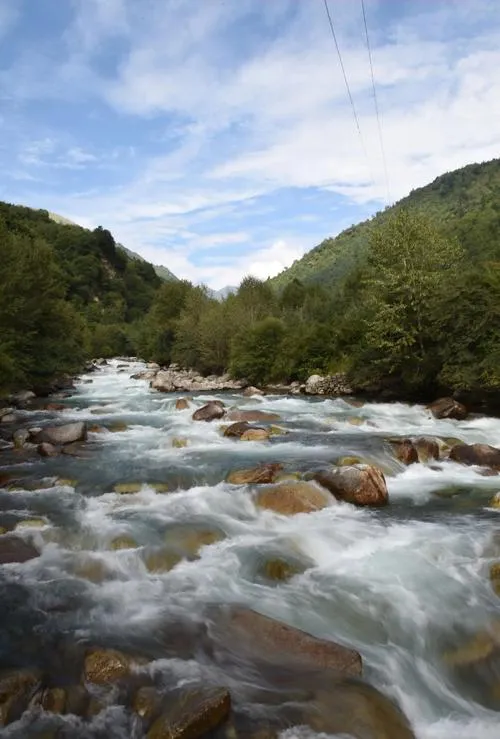
A high-altitude torrent, the kind of water fished on the Tibetan plateau of Sichuan.
Where Sichuan sits among Asia’s frontier destinations
Anglers reach China through comparison, not through a search for China. If you are already weighing Mongolia against Bhutan or Kamchatka, western Sichuan belongs on that shortlist — and it is the outlier on access.
| Destination | Headline species | Season | Access |
|---|---|---|---|
| Mongolia | Taimen (Hucho taimen) | September – October | Permits and quotas, lodges, domestic flights |
| Kamchatka | Wild rainbow trout | July – October | Very remote, fly-out, Russian visa |
| Bhutan | Golden mahseer | March – April, October – November | Permit, tourist levy, mandatory guide |
| Western Sichuan | Schizothorax, white-spotted char | April – October | No Tibet-type permit for Aba and Garzê |
The trade is a real one. Mongolia and Kamchatka offer larger fish and a longer record of guided fishing; Sichuan offers water that has effectively never been fished with a fly, at the cost of being the least documented of the four. If you want the wider survey first, we wrote it up under off the beaten path fly fishing.
What you fish on the plateau
Two cold-water fish structure the fishing here: the white-spotted char and the snow trout of the genus Schizothorax. Both are adapted to fast, cold, high-altitude water, and neither has been meaningfully targeted by sport fishing.
| Species | Latin name | Habitat |
|---|---|---|
| Snow trout | Schizothorax | High-altitude torrents and rivers |
| White-spotted char | Salvelinus sp. | Cold headwaters |
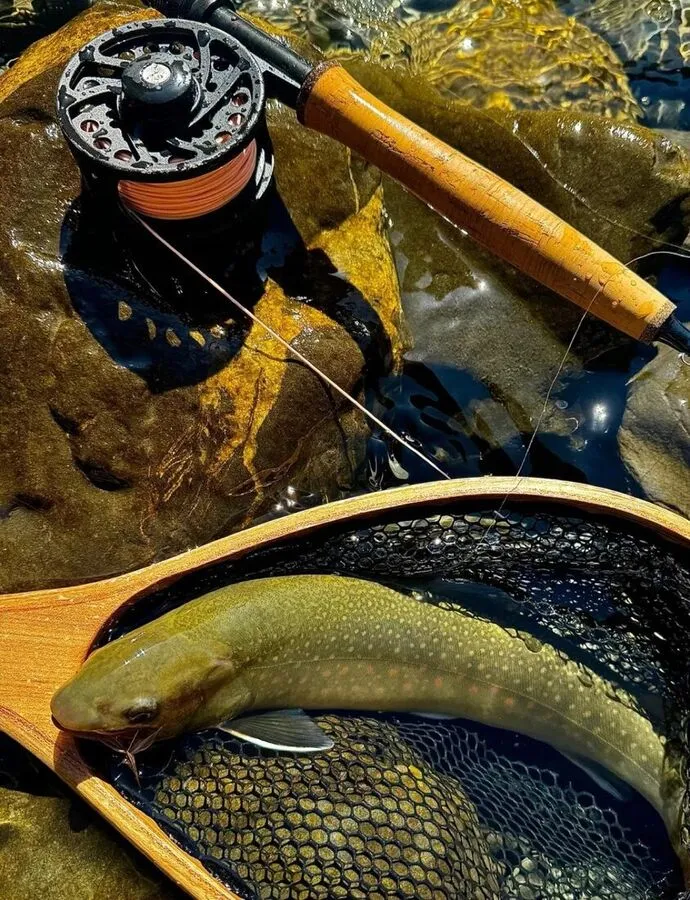
White-spotted char (genus Salvelinus), recognisable by the white leading edges of its fins. Systematic catch and release.
These are not trophy fish, and we do not sell them as such. The interest is the water and the naivety of populations that have almost never been fished. Average sizes and notable catches by species are shared at registration, from our own field records.
One species is never a target, here or anywhere on our trips: the Sichuan taimen (Hucho bleekeri), critically endangered.
No foreign permit, unlike Tibet
Aba and Garzê prefectures in Sichuan are open to foreign travellers without a special permit, unlike the Tibet Autonomous Region, which requires one. That regulatory gap is what makes this water reachable where Tibet is not.
No individual fishing authorisation is currently required of a foreign angler in these valleys. Local fisheries regulation — protected zones, closed periods, any permits — is checked for your departure window and confirmed before travel. We fish no protected zone.
When to go
The workable season runs April to October. The exact window depends on snowmelt in spring and on river levels, which govern water clarity.
Snowmelt lifts and colours the rivers in spring, then levels settle. The most reliable window runs from late spring to early autumn, avoiding the summer monsoon peaks that push water up. We set your dates against the actual state of the river, confirmed before departure.
How it is fished
The core method is tight-line nymphing on a light line, in granite torrents. The fish are uneducated but the water is fast and the drift is short.
Fish light: 2- to 4-weight rods, 8’6” to 9’, tight-line nymphing or sight fishing depending on the drift. Fine fluorocarbon tippet, tungsten beadhead nymphs — perdigons, pheasant tail, hare’s ear — to hold the bottom in quick current. Dry fly is occasional and opportunistic, on a spotted rise: sedges and small terrestrial patterns when surface activity allows. Tackle is matched to the day’s river with your guide.
How the expedition runs
The trip starts and ends in Chengdu, then runs west to the fishing valleys. Groups are capped at four anglers.
Indicative duration: 10 days, Chengdu to Chengdu, of which around seven are on the water. The road links Chengdu to the western valleys over one to two days depending on the valley chosen, climbing steadily in altitude. Accommodation in valley lodges and guesthouses, with a fly guide and a local operator. Maximum four anglers per group. Indicative budget: from €6,000 per angler, excluding international flights, to be confirmed against the format chosen. No online booking: access is through the waiting list.