
Hainan · guided expedition
Snakehead fly fishing in Hainan, China
- Season
- summer – autumn
- Foreign permit
- None
- Release
- Systematic
Snakehead fly fishing in Hainan targets species native to China — Channa maculata, Channa asiatica and the dwarf snakehead Channa gachua — on surface poppers, in tropical rivers falling from the island’s central mountains. It is not the fish in the Malaysian and Thai videos: the giant snakehead or toman (Channa micropeltes) is not native to China, and we will not pretend otherwise. Systematic release, no special permit for a foreign angler.
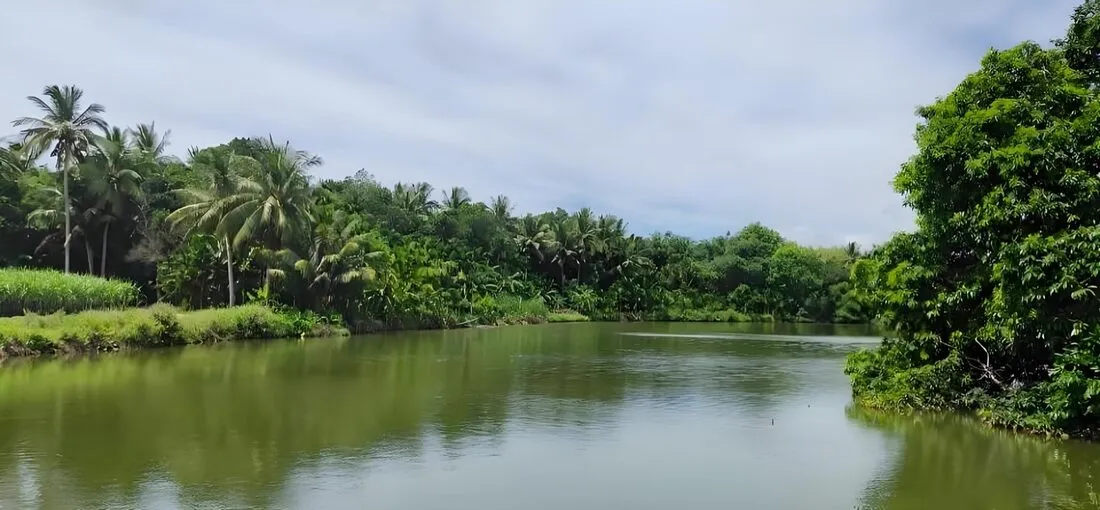
Natural, vegetated tropical water, the kind of habitat where snakehead hunts.
The toman problem: which snakehead is actually here
Almost every snakehead fly fishing video in circulation is filmed in Malaysia or Thailand, on Channa micropeltes. That fish does not occur naturally in China. If you book a Chinese snakehead trip expecting it, you have been sold the wrong species.
| Species | Common name | Status in Hainan |
|---|---|---|
| Channa maculata | Blotched snakehead | Native |
| Channa asiatica | Chinese snakehead | Native |
| Channa gachua | Dwarf snakehead | Native |
| Channa micropeltes | Toman / giant snakehead | Absent from China |
The main fly target is the blotched snakehead (Channa maculata), the most widespread and the hardest fighter on a popper; C. asiatica and C. gachua fill in the picture depending on the sector. These are fighting fish rather than big fish. Average sizes and notable catches are shared at registration, from our field records.
If you are still mapping the region, we compare it against the rest of the continent under fly fishing destinations Asia.
Natural rivers, not reservoirs
Hainan’s four main rivers — the Nandu, Wanquan, Changhua and Linshui — fall from the island’s central mountains. Snakehead ambush from their slow sections, backwaters and vegetated margins: living, moving water, not a concrete impoundment.
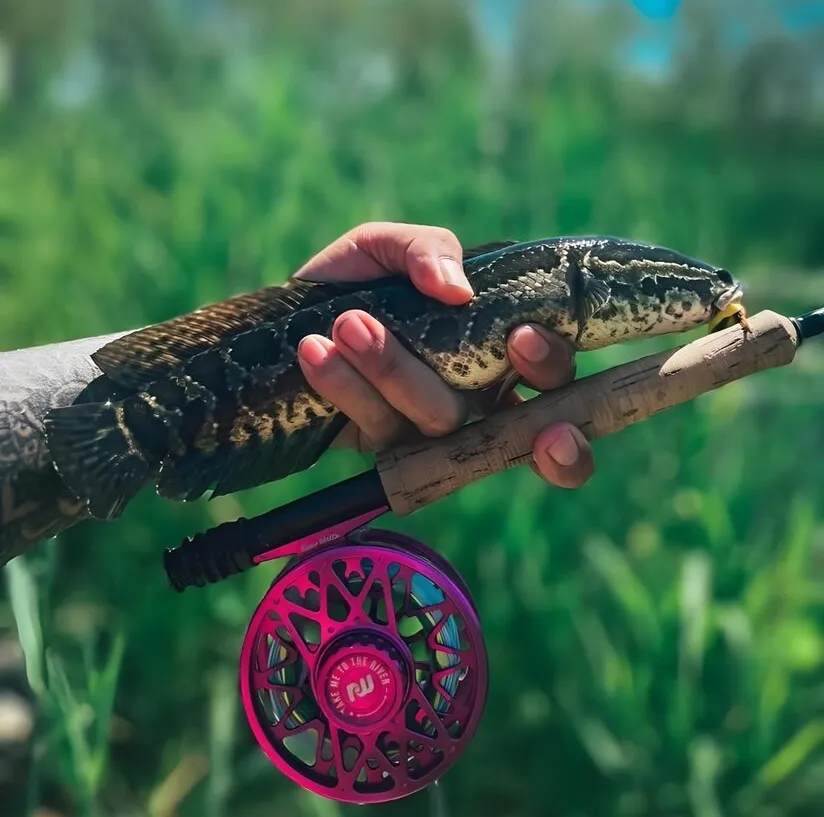
Snakehead taken on a surface popper. Systematic catch and release.
We fish those slow sections, backwaters and vegetated margins on foot from the bank, and from a light craft where access demands it. Fishable sectors and confirmed snakehead presence by catchment are settled before departure. We do not fish artificial reservoirs.
When to go: tropical climate and the spring ban
Hainan is warm year-round, which lengthens the window in which snakehead will work the surface. But a fishing ban has applied to the province’s inland waters each spring since 2017, so the useful season falls in summer and autumn.
The ban applies every spring in provincial inland waters, and its exact dates are set by the local annual notice. We schedule departures outside that period, in summer and autumn, and confirm the window before travel.
How snakehead is fished on the fly
The base technique is a popper on an 8-weight, cast tight to cover and retrieved in short strips to trigger the take. It is visual, surface fishing, and the eat is violent.
An 8-weight rod with a fast action to lever fish out of cover, floating line, and a heavy fluorocarbon point (0.40 mm and up). Poppers and gurglers laid against the vegetation and worked back in short, broken strips; bulky streamers — deceivers, dahlbergs — when the fish refuses the surface. Strike firmly, fight hard to keep the fish out of cover, then release with care.
How the expedition runs
The trip runs on Hainan’s rivers, in groups of four anglers. Its high-altitude counterpart is our fly fishing trip Sichuan.
Arrival in Haikou, the island capital, then road transfer to the rivers of the centre and south. Indicative duration: 8 days, of which five to six are on the water. Local accommodation, with a fly guide and an on-the-ground contact. Maximum four anglers per group. Indicative budget: from €4,500 per angler, excluding international flights, to be confirmed against the format chosen. No online booking: access is through the waiting list.